That's the problem ecards birthday greetings quietly solve. Not because digital is better than paper, but because a kid can open one on a tablet, laugh, then open it again while waiting for the cake. Same card, four viewings.
The trick isn't the platform though. It's whether the card feels like it came from a person who actually knows them. A Fun & Creative Birthday eCard with their name, their current obsession, and one joke beats a beautiful design with "Happy Birthday" typed in the middle. Every time.
Why kids react differently to eCards
Kids don't read cards. They look at them, decide in two seconds whether it's interesting, and act accordingly.
Colour helps. So does a character they recognise. But the thing that really lands is seeing their own name in a place they didn't expect it, because at seven years old your name is still the most exciting word in the language.
There's a practical side too. Cousins in another city can send something that arrives on the actual day instead of three days late. And kids can send them back, which is worth more than it sounds. My niece spent twenty minutes choosing a card for her friend last year and took the whole thing extremely seriously.
12 Fun & Creative Birthday eCard ideas kids actually like
Pick one. Trying to do six of these at once is how you end up sending nothing at 10 PM.
1. Make it a three-panel comic. The child is the hero. Panel one: normal day. Panel two: something ridiculous happens. Panel three: birthday cake saves everyone.
2. Match their obsession, not last year's. Kids swap interests fast. Ask a parent what it is this month — dinosaurs, football, whatever it is because a unicorn card sent to a kid who moved on to sharks lands badly.
3. Let the number be the whole design. A giant "7" and nothing else. Little kids are enormously proud of their new age and want it announced.
4. Hide a clue in it. "Your present is somewhere cold." Then watch them sprint to the fridge. The card stops being a card and becomes the start of a game.
5. Use last year's photo. Add one line: look how much you've grown. Parents get emotional about this one, which is a bonus.
6. Write it from the dog. Or the cat, or the hamster. "You dropped a biscuit last Tuesday. I have not forgotten." Works on every child I have ever tried it on.
7. Put a terrible joke inside. The worse the better, honestly. A bad cake joke gets repeated at school for a week and you get credit for all of it.
8. Get everyone to sign one card. Five friends, one line each. Kids love reading the whole list and working out who wrote what.
9. Send it early, in pieces. Three sleeps to go. Then two. Then one. The countdown ends up being more fun than the card.
10. Give them an instruction. "Do a happy dance before you open your gift." Silly, but they'll do it.
11. One reason per year. Turning six? Six reasons they're great, and make them specific. "You share your crayons even when you don't want to" beats "you're so kind."
12. Send it from somewhere impossible. A card posted from the moon. A greeting from a pirate ship that's running late. Under eight, this is magic.
What to write inside
This part stalls people more than the design does, which is odd, because the bar is low.
Use their name. Keep it short — under forty words for the younger ones, because attention runs out fast. Mention one true thing about them. Not "you're growing up so fast," but "you told me the whole story of your school trip and it took eleven minutes."
And skip the advice. Nobody turning nine wants to read about hard work paying off.
Something like this does the job:
"Happy Birthday, Aarav! You're seven today, and you are still the funniest person I know. Hope this year has a lot of cake and very bad jokes in it."
Read it once before you send. If it sounds like a school report, say it out loud the way you'd actually say it and write that instead.
Need more wording ideas? Virtual Birthday eCards 20 Heartfelt Messages has lines you can lift and adjust in a minute.
Ages 2–4
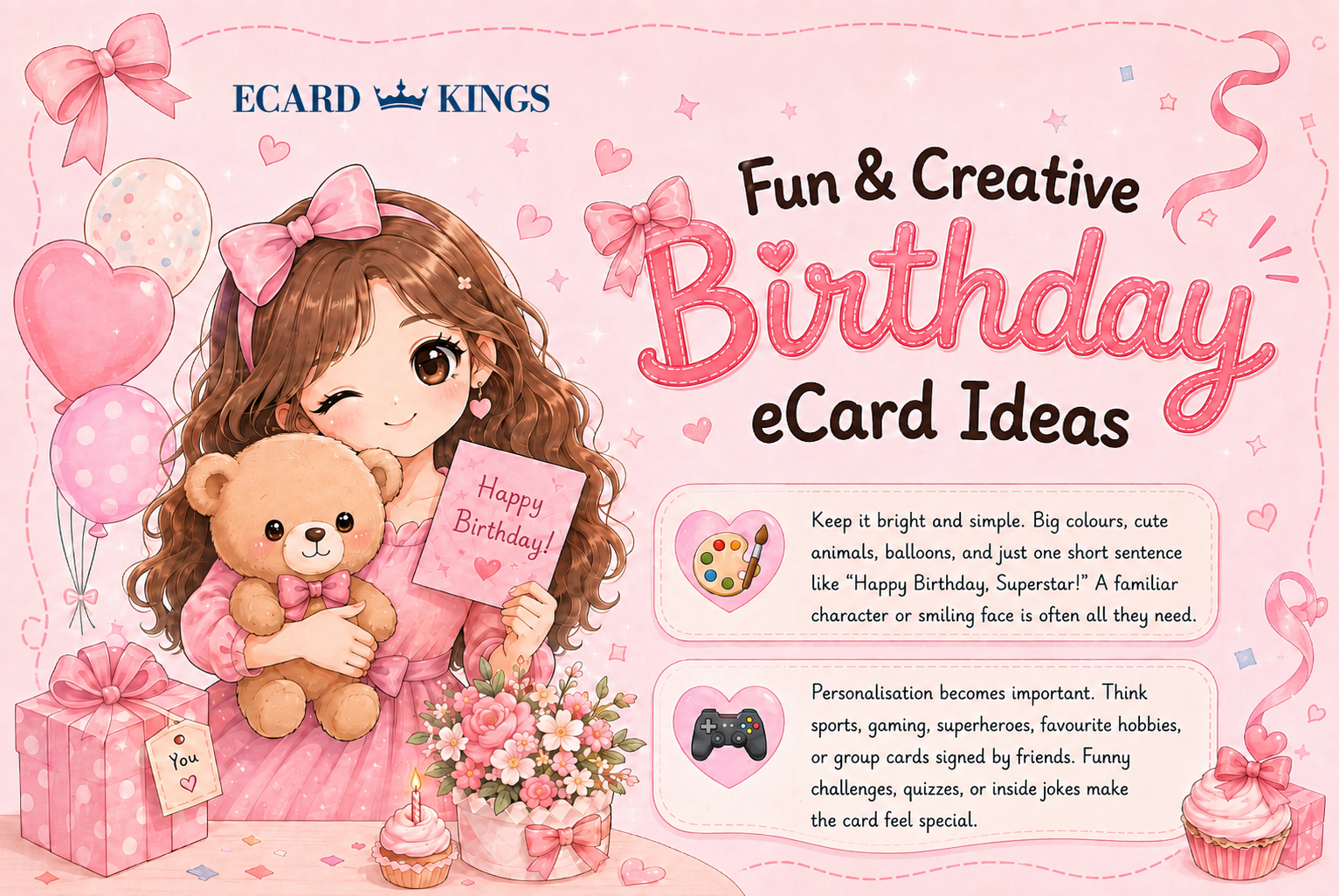
Keep it bright and simple. Big colours, cute animals, balloons, and just one short sentence like "Happy Birthday, Superstar!" A familiar character or smiling face is often all they need.
Ages 5–7
This is the golden age for fun cards. Add silly jokes, cartoons, giant birthday numbers, mazes, stickers, or funny "birthday missions" like "Eat cake first. Ask questions later!"
Ages 8–10
Personalisation becomes important. Think sports, gaming, superheroes, favourite hobbies, or group cards signed by friends. Funny challenges, quizzes, or inside jokes make the card feel special.
Ages 11–13
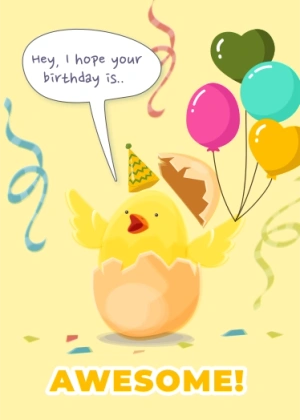
Less is more. Go for clean, modern designs with a clever joke or meme-style humour. One genuine line like "Hope this year is as awesome as you are" feels more meaningful than a long message. Avoid overly childish themes.
When to send it
Morning. Before school, before the party, before the house gets loud. That's the only window where a child will sit still long enough to read it properly.
For younger kids, send it to a parent's email or phone and ask them to show it. If a whole family is sending greetings, spread them out across the day so there's a small surprise every couple of hours instead of a pile-up at breakfast. Ecard Kings lets you schedule the send time, which helps if you're the sort of person who remembers at midnight.
Worth saving them, too. A lot of parents keep a folder of these, and a note from a grandparent turns out to be worth quite a lot fifteen years later.
The short version
Kids don't judge design. They judge whether it feels like it came from someone who knows them. A bad joke, a dinosaur in a party hat, one line about something they actually did, and their name spelled right.
That's the whole recipe. Pick one idea from up there, give it five minutes, and send it before breakfast. Have a look through the kids' designs at Ecard Kings, put your own words in, and you're done.
FAQs
1. What makes a birthday eCard good for a child?
Colour and personalisation, mostly. Kids react to bright design, familiar characters, and their own name far more than to careful wording. Keep the message short and match the theme to whatever they're into right now.
2. Are eCards okay for young kids without phones?
Yes. Send it to a parent's email or phone and ask them to show it. Most children under ten open cards on a parent's device anyway, so nothing is lost.
3. When should I send a birthday eCard to a child?
Morning, before school or before the party starts. That's when they have the attention for it. Anything arriving late at night gets a glance and nothing more.
4. Can I add a photo to a birthday eCard?
Most platforms let you. A photo from last year's birthday, or from a day you spent together, makes the card feel personal, which matters a lot if you live far away.
5. How long should the message be?
Two or three lines for under-sevens, up to five for older kids. Name, one specific thing you like about them, happy birthday, done.